QR Code Menu Management Dashboard Case Study
QR Code Menu Management Dashboard Case Study
This case study details the development and impact of our QR Code Menu Management Dashboard, designed to help restaurant managers efficiently manage digital menus.
This case study details the development and impact of our QR Code Menu Management Dashboard, designed to help restaurant managers efficiently manage digital menus.
Senior Product Designer
Year 2023
Web application / Responsive
2 Months
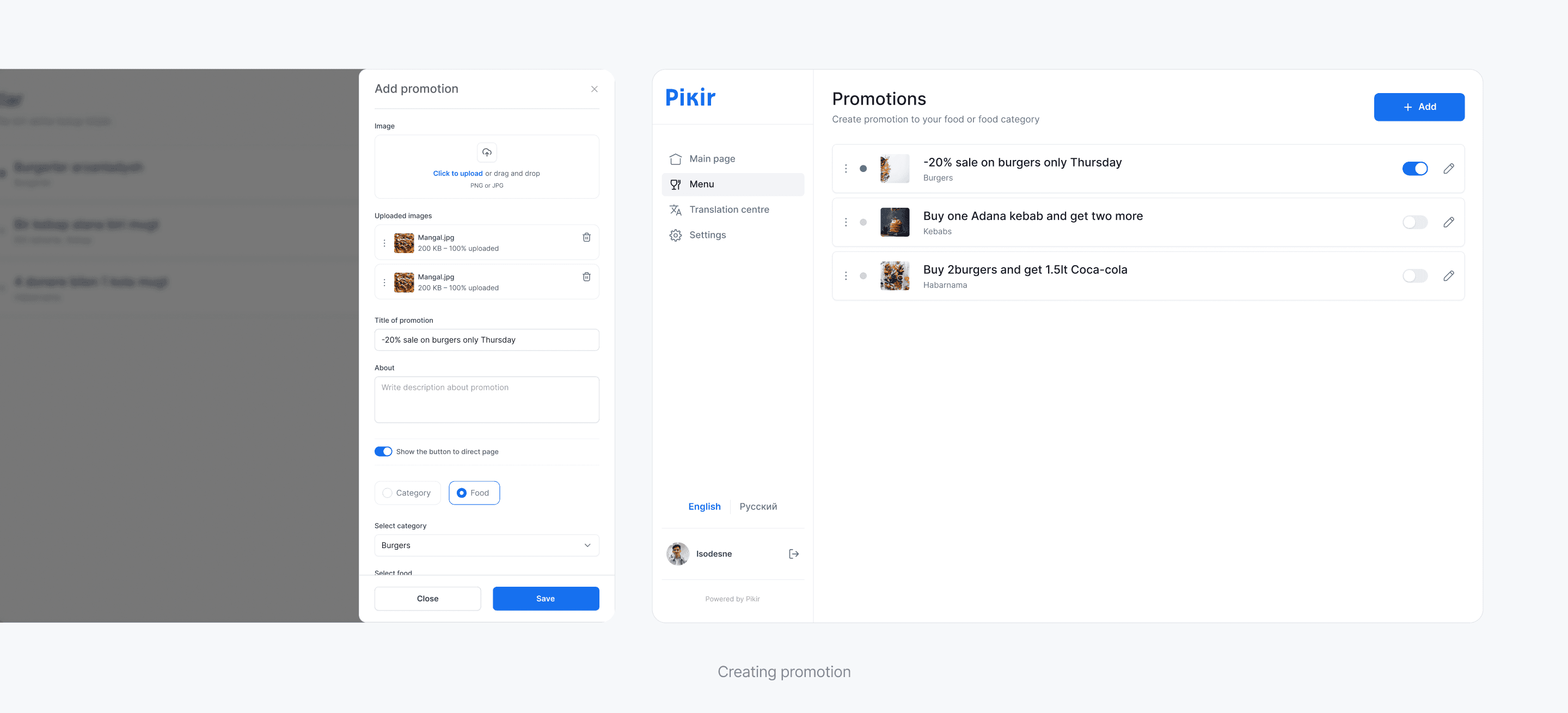
Project Overview: QR Code Menu Dashboard
Project Overview: QR Code Menu Dashboard
The QR Code Menu Dashboard is a tool for restaurant managers to manage their digital QR code menus. This case study focuses on the redesign and improvements of this dashboard.
It is currently used by 102 restaurants and helps customers view menus on their mobile devices, making the process faster.
The QR Code Menu Dashboard is a tool for restaurant managers to manage their digital QR code menus. This case study focuses on the redesign and improvements of this dashboard.
It is currently used by 102 restaurants and helps customers view menus on their mobile devices, making the process faster.
My Role
My Role
As the Lead Designer, I was responsible for making design decisions and leading the design team.
As the Lead Designer, I was responsible for making design decisions and leading the design team.
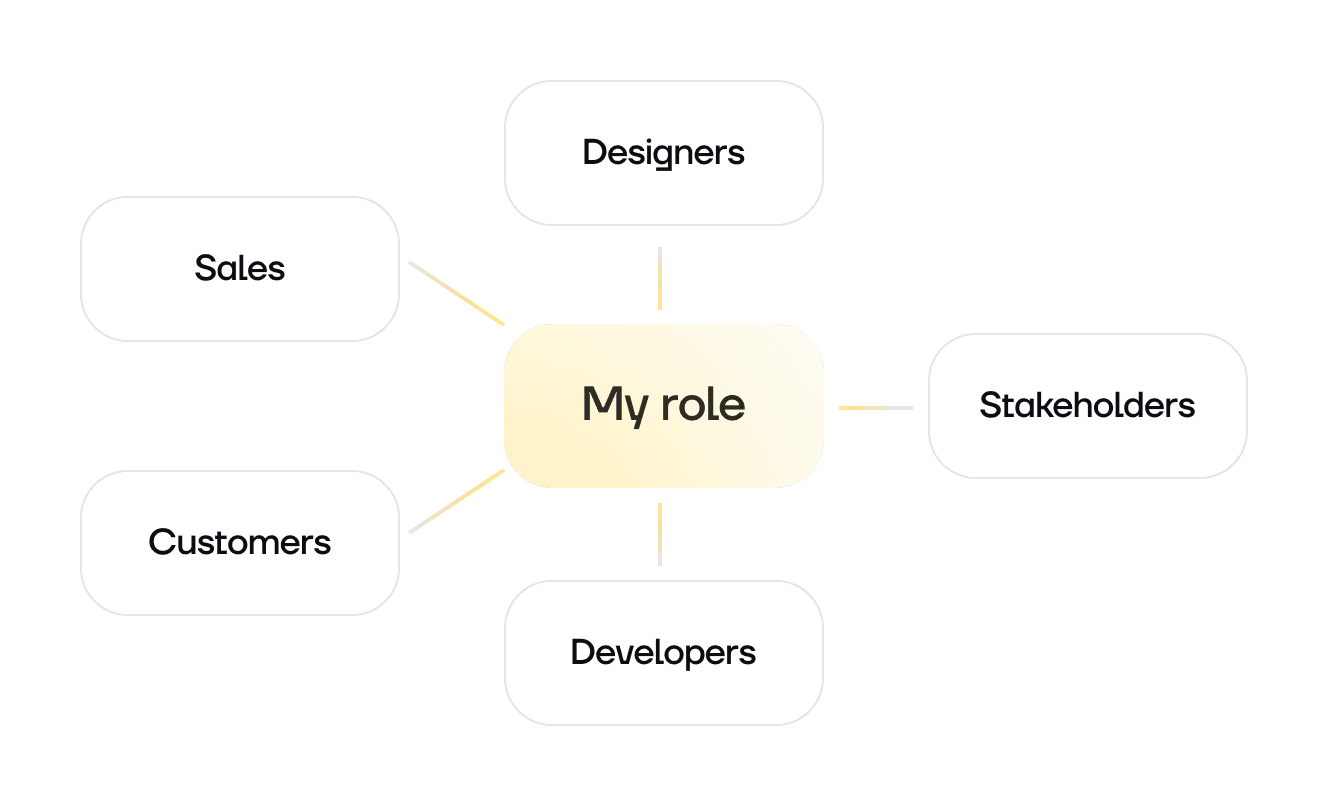
My tasks included:
My tasks included:
Overseeing the design process and leading the design team
Overseeing the design process and leading the design team
Conducting user research to guide our design choices
Conducting user research to guide our design choices
Ensuring the dashboard was easy to use and visually appealing.
Ensuring the dashboard was easy to use and visually appealing.
Working with stakeholders to understand their needs.
Working with stakeholders to understand their needs.
Context and Challenges:
What Problems Existed?
Context and Challenges:
What Problems Existed?
We interviewed six people from both small and large restaurants to understand their challenges and find areas for improvement. Through these interviews, we discovered several key issues:
We interviewed six people from both small and large restaurants to understand their challenges and find areas for improvement. Through these interviews, we discovered several key issues:
Inventory Management.
One client mentioned that they often run out of ingredients like mangoes, which are essential for certain cocktails. When this happens, they can't prepare those drinks and don't want them to appear on the menu.
Customer Engagement Insights
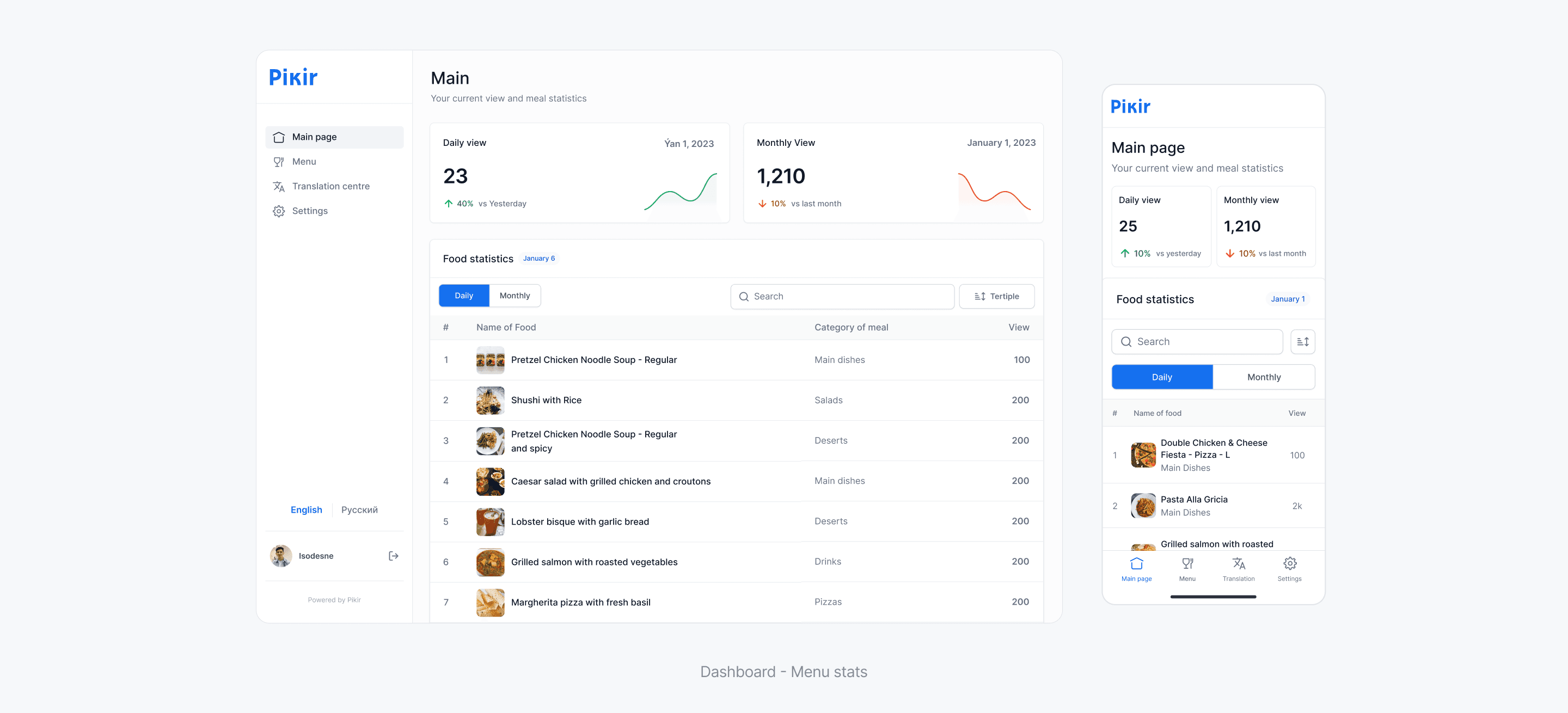
Restaurant managers are keen to know how many people are using the QR code menus and viewing specific meals.
Language Barriers
Some restaurants, like Chinese or Italian ones, want to provide menu information in their native languages but struggle because they don't know the language and rely on Google Translate.
Promotional Limitations
Managers expressed the need for tools to promote new meals or special deals effectively.
Menu Customization Needs
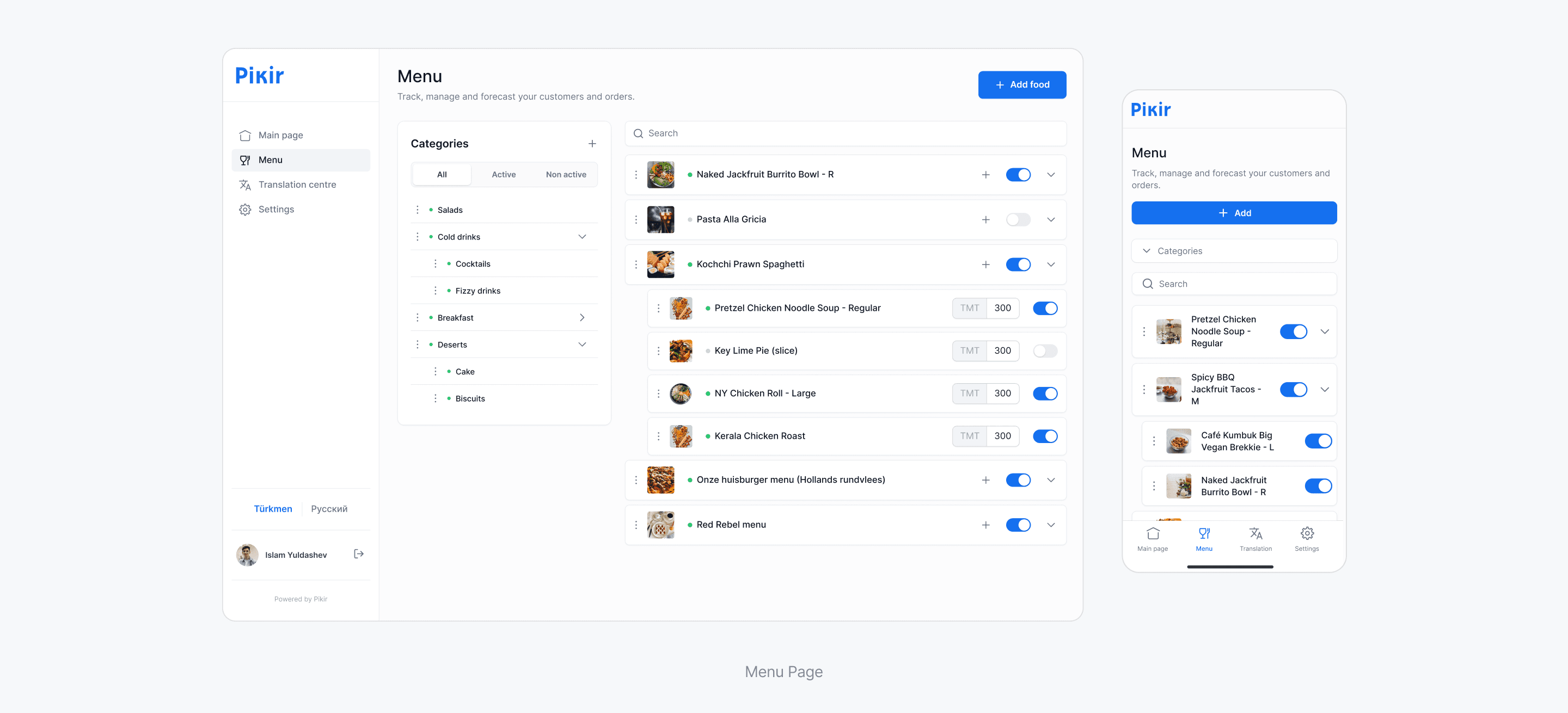
They also wanted the ability to easily reorder and categorize menu items to better suit their needs.
Inventory Management.
One client mentioned that they often run out of ingredients like mangoes, which are essential for certain cocktails. When this happens, they can't prepare those drinks and don't want them to appear on the menu.
Customer Engagement Insights
Restaurant managers are keen to know how many people are using the QR code menus and viewing specific meals.
Language Barriers
Some restaurants, like Chinese or Italian ones, want to provide menu information in their native languages but struggle because they don't know the language and rely on Google Translate.
Promotional Limitations
Managers expressed the need for tools to promote new meals or special deals effectively.
Menu Customization Needs
They also wanted the ability to easily reorder and categorize menu items to better suit their needs.
Strategic Approach
Why Did It Matter to the Business?
Strategic Approach
Why Did It Matter to the Business?
User Satisfaction:
Finding and addressing usability problems was crucial to ensure restaurant managers could easily use our system, keeping them happy and retaining them as clients.
Centralized System:
As we onboarded more clients, their requirements grew. We needed a centralized system that could satisfy all restaurant needs efficiently.
Menu Autonomy to our users:
Creating a system where users could make their own menus was essential. We built this feature and integrated it into the Menu Dashboard, allowing managers to independently manage and customize their menus.
User Satisfaction:
Finding and addressing usability problems was crucial to ensure restaurant managers could easily use our system, keeping them happy and retaining them as clients.
Centralized System:
As we onboarded more clients, their requirements grew. We needed a centralized system that could satisfy all restaurant needs efficiently.
Menu Autonomy to our users:
Creating a system where users could make their own menus was essential. We built this feature and integrated it into the Menu Dashboard, allowing managers to independently manage and customize their menus.
Our previous business process
Involved a salesperson visiting restaurants in person to talk with the owner or manager. The salesperson would learn all the requirements and relay this information to us, the designers. We would then create the design and pass it to the developers to build the product. This approach took significant time and personal effort.
Involved a salesperson visiting restaurants in person to talk with the owner or manager. The salesperson would learn all the requirements and relay this information to us, the designers. We would then create the design and pass it to the developers to build the product. This approach took significant time and personal effort.
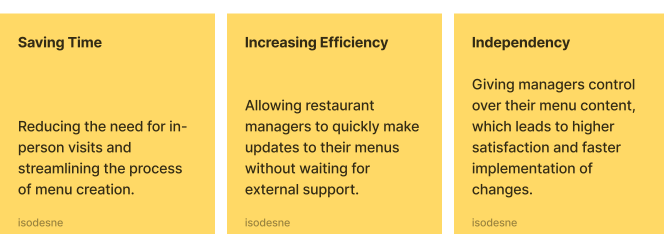
One of our key business goals was to build a system where restaurant owners or managers could create their menus based on their own requirements. This system provides business value by:
One of our key business goals was to build a system where restaurant owners or managers could create their menus based on their own requirements. This system provides business value by:
Solutions:
What Ideas Did We Explore and Why?
Solutions:
What Ideas Did We Explore and Why?
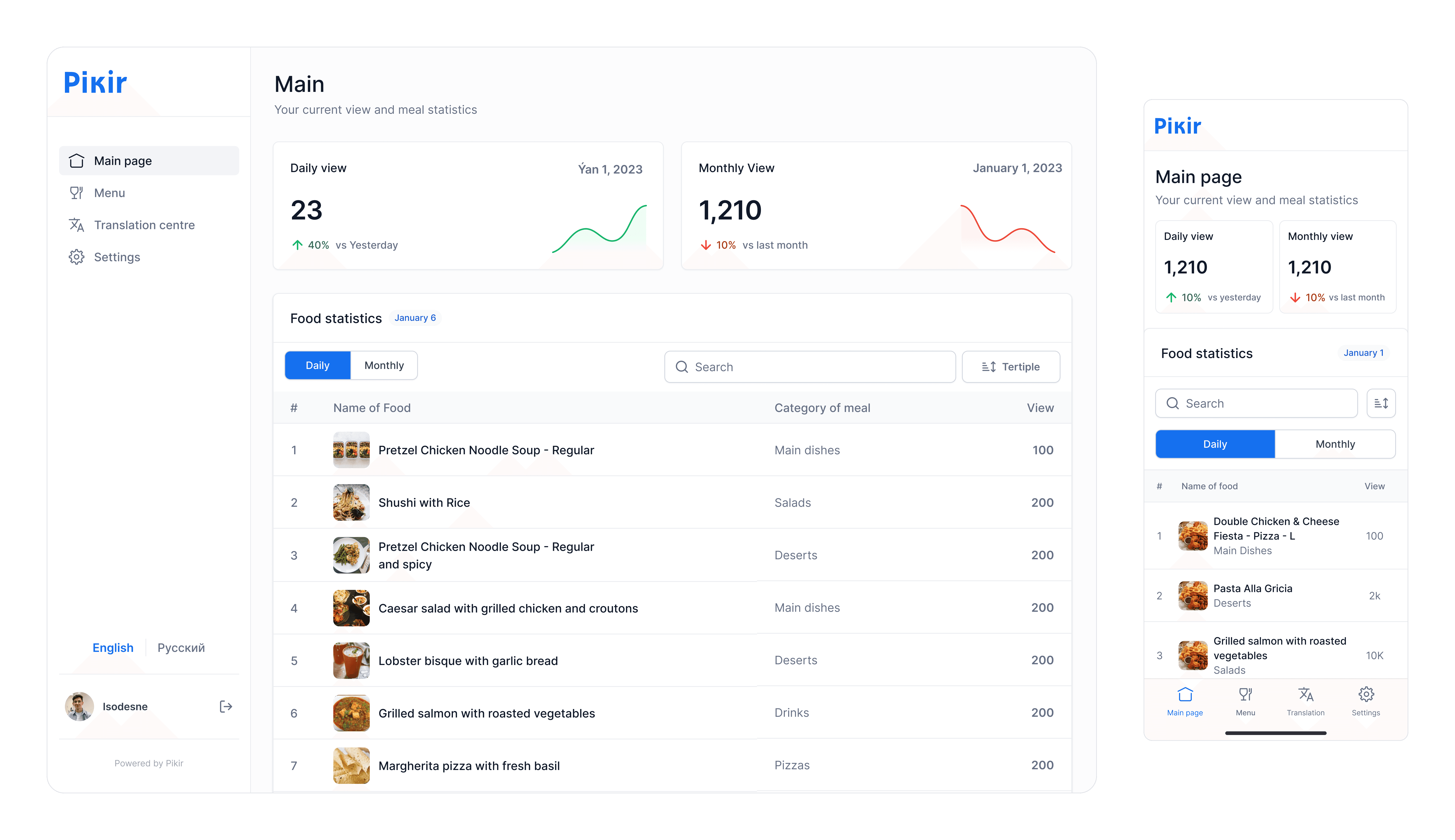
User visiting and meal view analytics implementation to dashboard:
To provide restaurant owners with insights into customer engagement with the menu.
User visiting and meal view analytics implementation to dashboard:
To provide restaurant owners with insights into customer engagement with the menu.
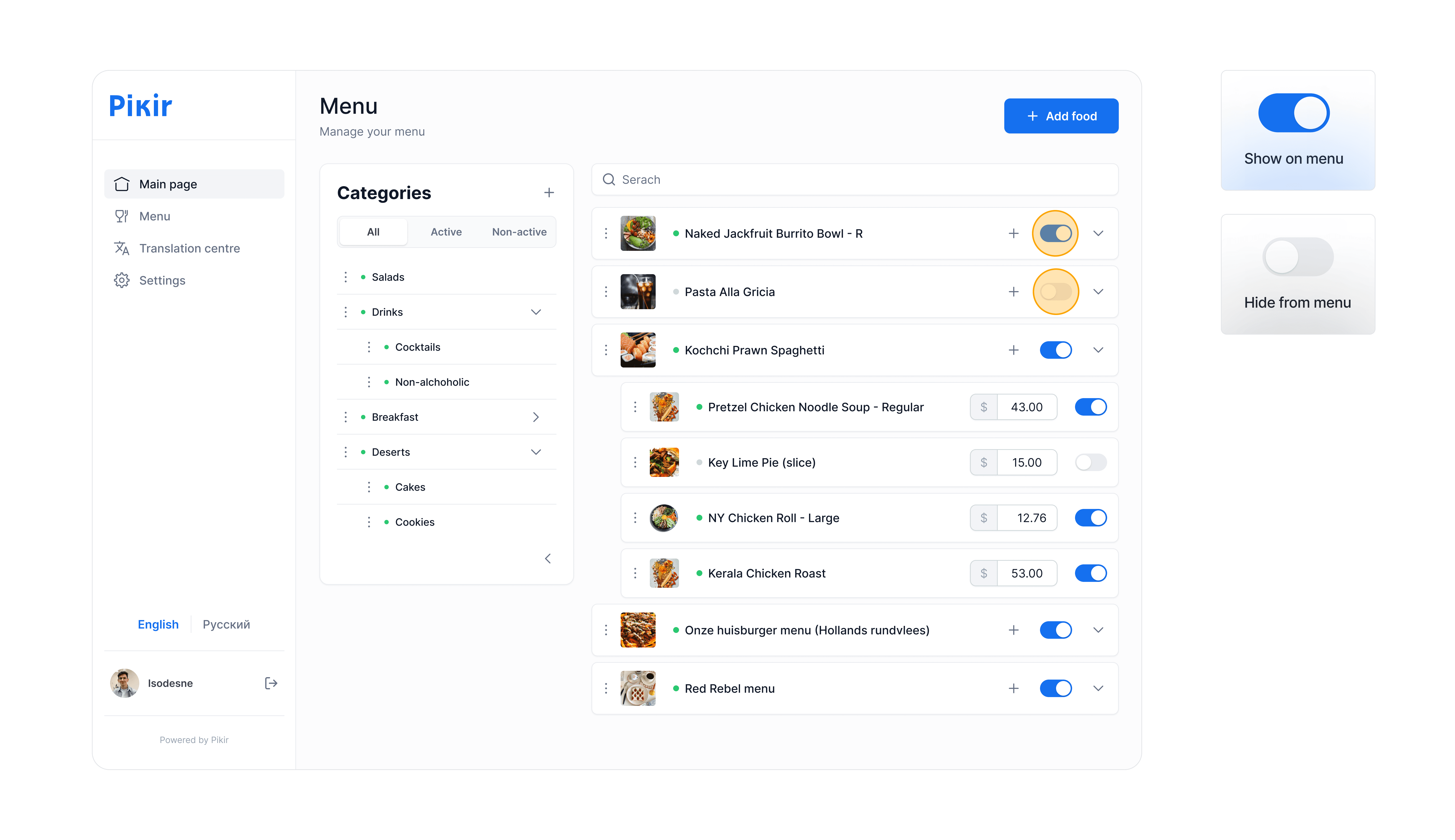
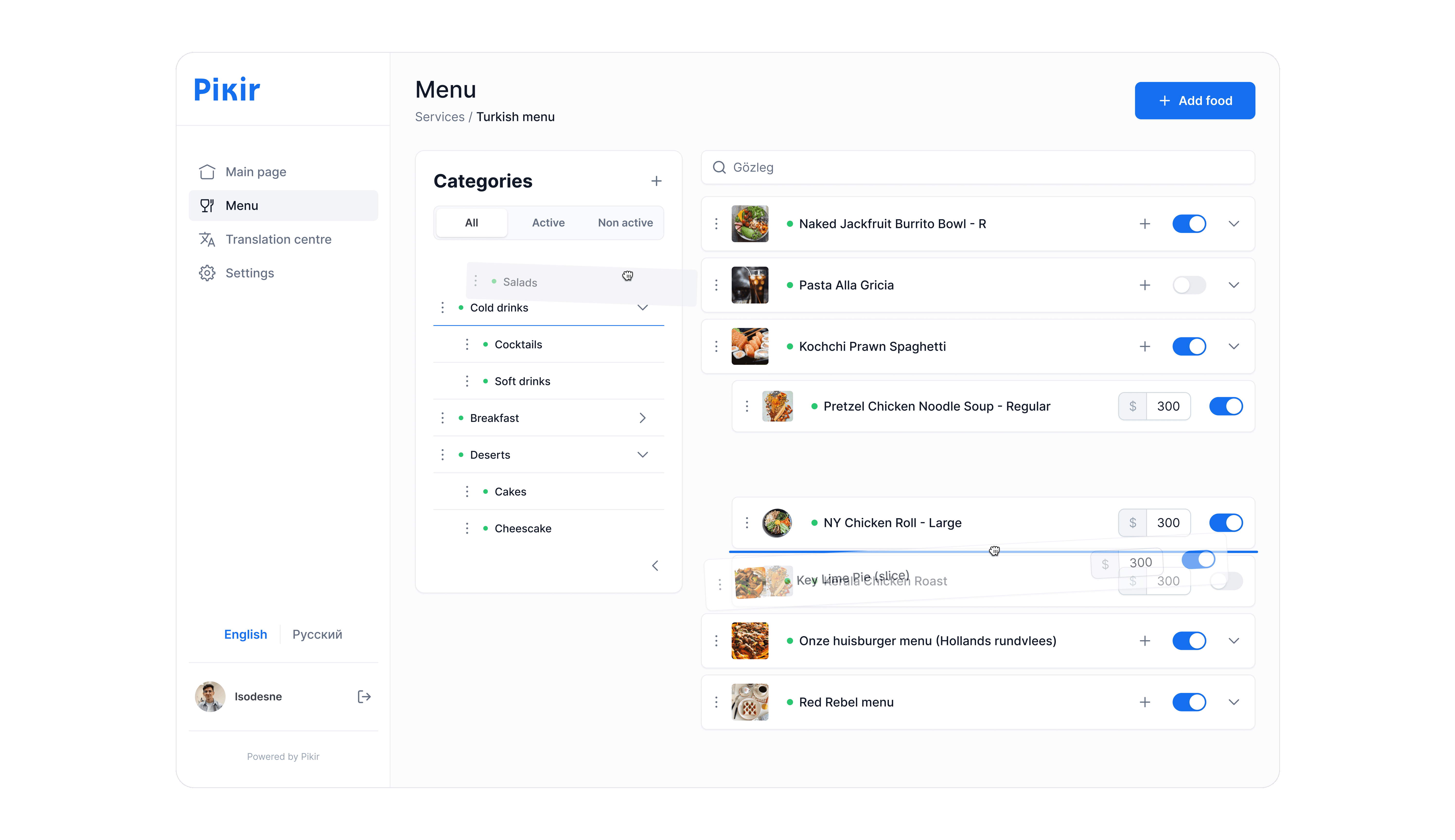
Easy Toggle Switch for Managing Menu Items
We added a toggle switch for each meal and category, allowing restaurant managers to easily show or hide items on the menu. When we demonstrated this to restaurant managers, they loved the simplicity and time-saving aspect of not having to delete items, just hiding them. It seemed simple, but we only discovered it by empathizing and talking with our users.
Easy Toggle Switch for Managing Menu Items
We added a toggle switch for each meal and category, allowing restaurant managers to easily show or hide items on the menu. When we demonstrated this to restaurant managers, they loved the simplicity and time-saving aspect of not having to delete items, just hiding them. It seemed simple, but we only discovered it by empathizing and talking with our users.
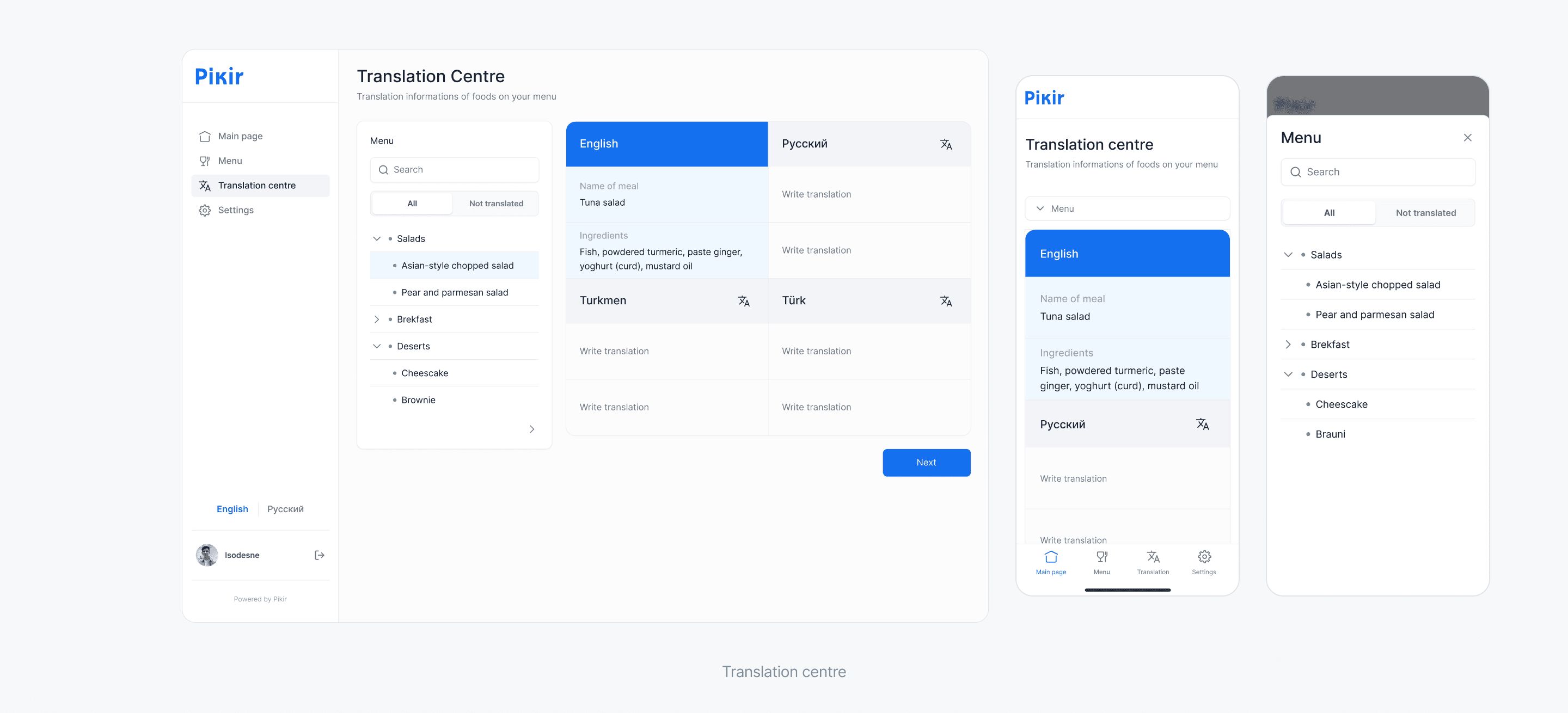
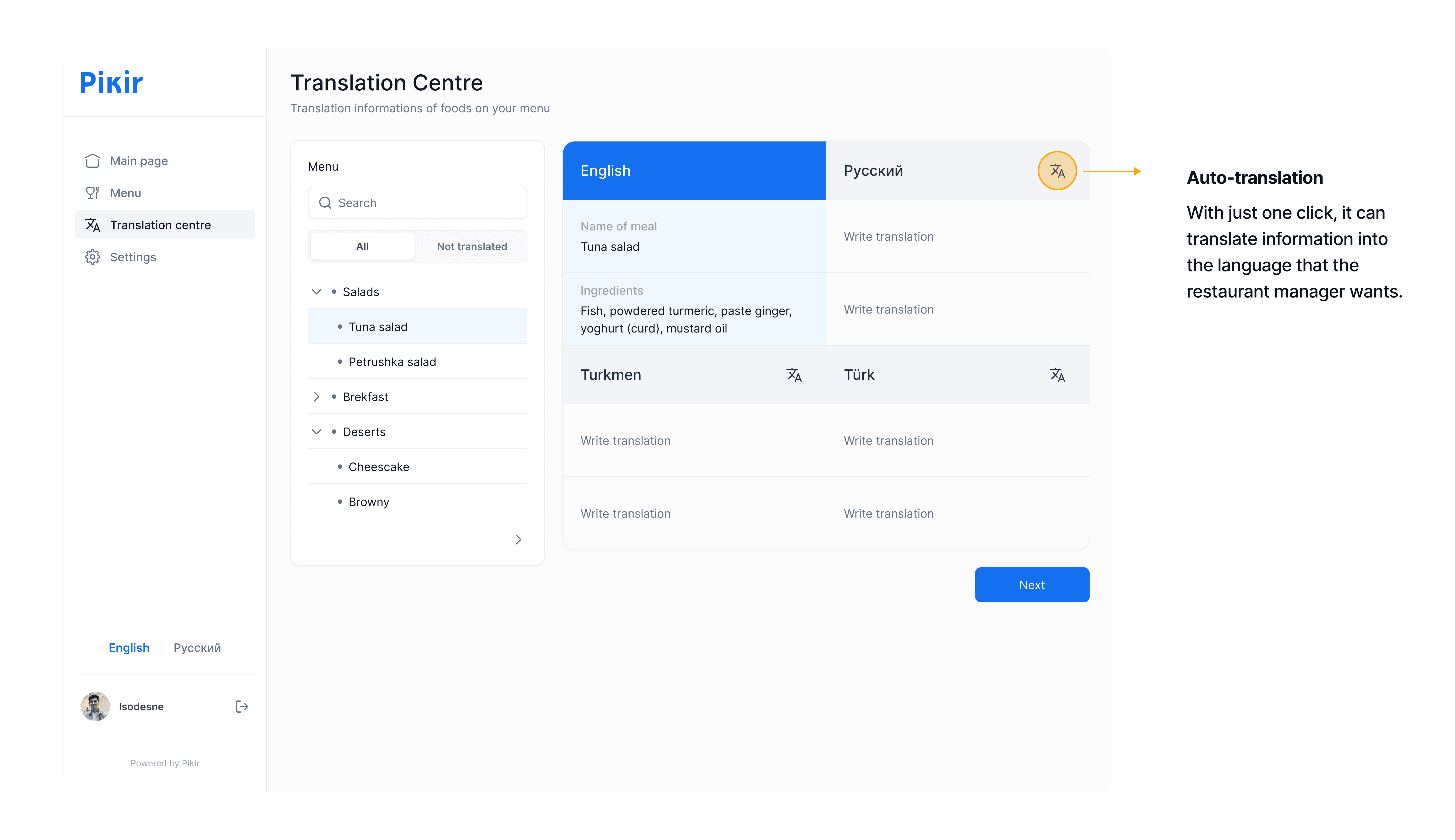
Translation Features:
To help managers translate meal names and ingredients into different languages easily. After adding meal names and ingredients, users can go to the translation center and use the auto-translate feature to translate into any language they want.
Translation Features:
To help managers translate meal names and ingredients into different languages easily. After adding meal names and ingredients, users can go to the translation center and use the auto-translate feature to translate into any language they want.
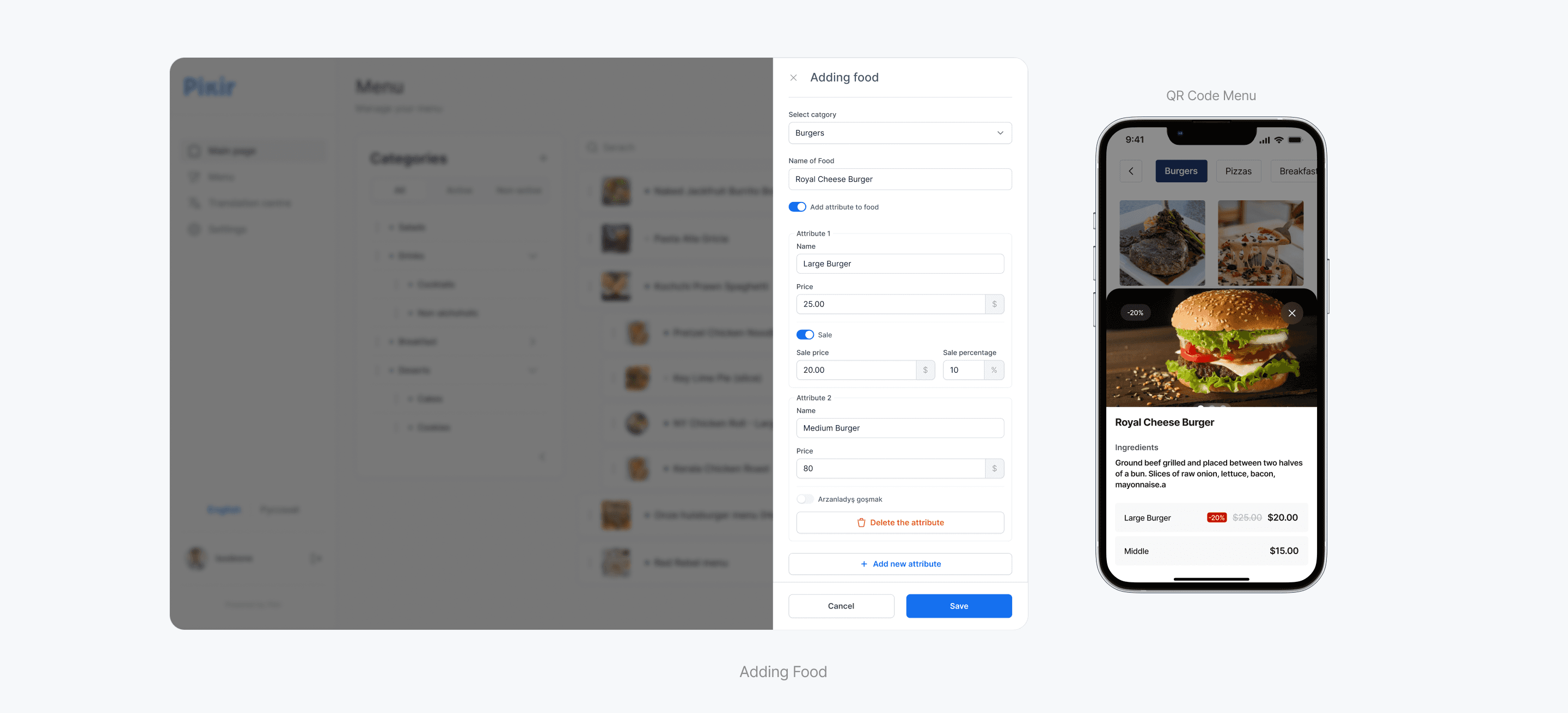
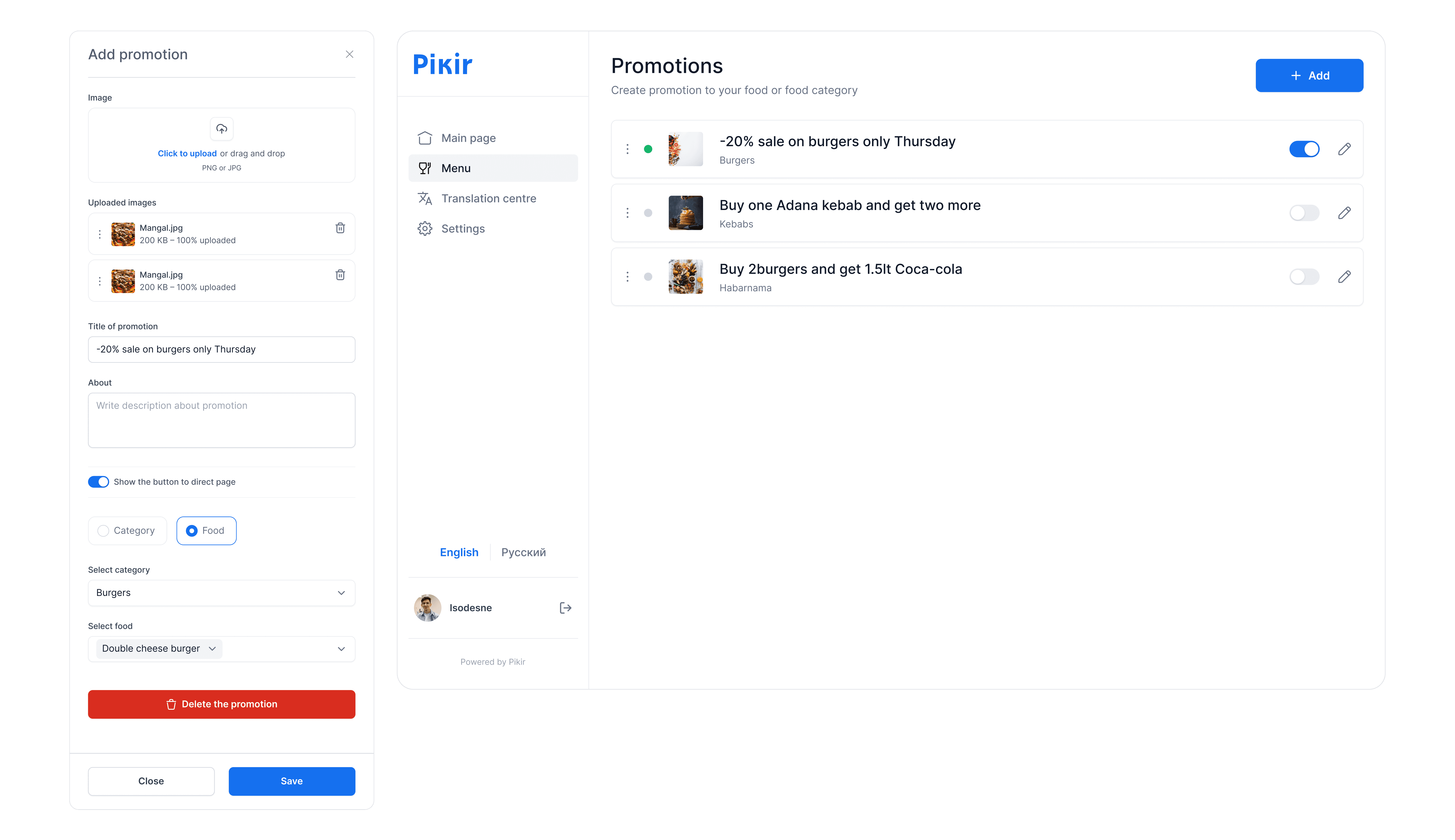
Promotion creating
To allow managers to highlight new meals and special deals.
Promotion creating
To allow managers to highlight new meals and special deals.
Customizable Menu Layout
To make reordering and categorizing menu items easier.
Customizable Menu Layout
To make reordering and categorizing menu items easier.
Validation:
How Did User Research Shape Our Concepts?
Validation:
How Did User Research Shape Our Concepts?
We conducted mostly qualitative research by continuously talking with users. We carried out six user interviews to identify problems and then developed solutions. After implementing these solutions, we tested them with the users. We performed usability testing with six people.
We conducted mostly qualitative research by continuously talking with users. We carried out six user interviews to identify problems and then developed solutions. After implementing these solutions, we tested them with the users. We performed usability testing with six people.
Feature Tested
Result
User Emotions & comments
New Analytics Features
All users found the new analytics features clear and useful.
Users felt informed and empowered with the new insights.
Toggle Switching
All users understood and appreciated the toggle switching feature.
Users felt it was convenient and time-saving.
Promotion Creation
The translation feature was clear and easy to use for all users.
Users felt relieved and confident about reaching a diverse audience. Some club owners like this feature lot.
Reordering Menu by Dragging
All users were able to create promotions easily.
Users felt excited and found it engaging to highlight new items.
Reordering Menu by Dragging
Four out of six users found it intuitive, but two users did not realize it could be dragged.
Users who understood felt it was flexible, while uninterested users didn't find it particularly useful.
If a user isn't interested in a feature, they tend to find it less usable. For example, most of our users didn't find the feature for reordering food or categories particularly interesting, and thus didn't see it as very useful. This highlights the importance of aligning features with user interests and priorities.
If a user isn't interested in a feature, they tend to find it less usable. For example, most of our users didn't find the feature for reordering food or categories particularly interesting, and thus didn't see it as very useful. This highlights the importance of aligning features with user interests and priorities.
Outcomes and Impact:
What Were the Final Solutions, and How Did They Perform Against Our Goals?
Outcomes and Impact:
What Were the Final Solutions, and How Did They Perform Against Our Goals?
Our product is now being used in around 102 places, including hotels, restaurants, clubs, and small cafes.
Our product is now being used in around 102 places, including hotels, restaurants, clubs, and small cafes.
Our product now holds approximately 68% of the market share in Ashgabat, demonstrating strong market acceptance and dominance.
Our product now holds approximately 68% of the market share in Ashgabat, demonstrating strong market acceptance and dominance.
The new and redesigned dashboard has had a positive impact on our users, enhancing their experience and satisfaction with the product.
The new and redesigned dashboard has had a positive impact on our users, enhancing their experience and satisfaction with the product.
Reflections:
What I Learned from the Process
Reflections:
What I Learned from the Process
Defining User Types Early:
It would have been time-saving if we had defined our user types early while selling our product. Besides restaurants, we also added users like hotels, two-cuisine restaurants, and clubs. This expanded our product requirements and implementations, continuously upgrading or changing features. This process took additional time and increased costs.
Defining User Types Early:
It would have been time-saving if we had defined our user types early while selling our product. Besides restaurants, we also added users like hotels, two-cuisine restaurants, and clubs. This expanded our product requirements and implementations, continuously upgrading or changing features. This process took additional time and increased costs.
Importance of User Research:
Continuous communication with users and conducting qualitative research was vital in identifying the real problems they faced. The insights gained from user interviews were invaluable in shaping our design solutions.
Importance of User Research:
Continuous communication with users and conducting qualitative research was vital in identifying the real problems they faced. The insights gained from user interviews were invaluable in shaping our design solutions.
The project is for the company:
Collaborated with:
Built with: